


So you think you want to be reunited with your feelings?

Updated: Oct 24, 2023
For a while I worked
in a forensic psychiatric secure unit. One morning, a patient in the midst of a psychotic episode exploded in rage and began throwing things around on the ward. Just a moment before, the staff had all stepped into one of the glass-walled rooms to be told some confidential information. The disturbed patient headed for the glass door and attempted to smash his way in using any hard object he could find, even managing to break chairs and small tables into splintered pieces against the strengthened glass. One of the staff wrestled to hold the door closed against him. A pregnant nurse hid under a table and hugged her arms around her belly and other staff stood protectively in front of her. A profoundly deaf colleague of mine grabbed hold of me and shouted ‘save me’ and put me between her and the violent patient. Other patients and a few of the staff were screaming.
The alarms had been sounded and staff ran in from other wards and grabbed the guy. He was 6ft 7, and a body builder. It took eight men to hold him down and eventually transfer him into the safe room. The head nurse then herded all the other twenty-one patients (eighteen men and three women) into a narrow corridor and sent all of the nursing staff (except the one who was assigned to sit outside the safe room) into another private room for a de-briefing. He left myself and a shell-shocked new nursing assistant who was still just shadowing and hadn’t received her keys yet, at the entrance to the corridor and ordered us to ‘guard’ the patients. And then the nurses didn’t come out again for an hour!
Imagine these poor patients – far more shocked and traumatised than the staff – (after all they had been out in the room with the violent patient with no staff there to protect them and no glass wall between themselves and him) – now herded like cattle into a tiny space, all suffering from their own states of mental illness and life traumas. They were wound up, pacing up and down and about to kick off, or crouching in fear on the floor against the wall.
I walked down the corridor and crouched down on the floor with them and asked them what they would like to do. They calmed as their opinions were sought and their requests listened to. The general consensus was that they needed to get off the ward for a bit. So I sorted through everyone. Who had rec ground parole? I let them out into the enclosed recreation ground to get some fresh air and space. Who had hospital grounds parole? I sent them all out in a group to have a cuppa at the patient’s teashop and advised them to talk to each other about what had happened. Only the few with no parole were left inside. Two of the only three women on the ward couldn’t speak English. When the Indian lady got distressed we used to sit and brush her long hair for her, as it calmed her down. She was sitting there terrified and screaming, so I assigned the nursing assistant to brushing her hair.
By the time the nursing staff came back out, the ward was virtually empty and completely peaceful. The head nurse was furious. He shouted at me and said I had no right to let everyone out (I did actually, I had equal authority to him in my own department), and he didn’t seem to get how appalling the staff’s behaviour had been just now, abandoning those poor patients for an hour, corralled in a narrow corridor, and how near to complete breakdown the patients had been.
Later, the profoundly deaf colleague apologised to me and said she was embarrassed that she’d used me as a human shield. She’d run onto another ward and sat with staff there and said her heart hadn’t stopped nearly pounding out of her chest in reaction for over half an hour and she couldn’t stop shaking.
And yet throughout the whole of this, I hadn’t felt a thing. I wasn’t shocked. I wasn’t scared. I felt completely calm and lucid. It had seemed perfectly natural for my colleague to ask me to protect her. Of course I would stand between her and the danger to keep her safe. I felt untouched by the whole affair.
I made the two-hour journey home consisting of two bus journeys, and went straight to my evening date with a young couple from a sexual abuse survivors’ group, who I’d been asked to befriend. This pair were so young and vulnerable it was painful to be with them. The boy was only eighteen but he’d already completed gender-reassignment surgery and hormone treatment. His story was agonising. When he was a girl, she’d been constantly sexually abused by her father and four brothers. She had asked for gender reassignment at the age of sixteen because she'd believed that if she changed her sex, not only would the abuse stop, but she’d become a new person and would no longer be able to be tormented by the memories of the abuse. She told me that she had thought that once she was a boy, her memories of being a girl would stop troubling her.
‘Did any of the psychiatric assessors ever ask you why you wanted to change sex?’ I asked.
Apparently no-one had ever asked her why she wanted to undergo gender reassignment, and so the reason had never come out, and the poor girl/boy had never been offered help and counselling for the source of his distress, nor redress against his abusers via the court.
He was trying to separate himself from feeling his own pain but, unfortunately, merely changing his outer body wasn’t going to heal his inner spirit. Now he was tormented by PTSD, flashbacks and memories, and could still experience the sensations of the abuse in his body, and was bewildered as to why. And even worse, he was now also being bullied and assaulted on the streets by boys who he used to know at school, and was in hiding from his family. The shocking failure of the system left me speechless.
The pair had chosen to go to a film. They’d chosen a film that I would never voluntarily have gone to see – a violent psychological thriller – but I was obliged to go in with them because I’d promised to spend the evening with them. In the middle of the film, there was a scene where a man suddenly turned into a psychopathic stalker/aggressor and picked up an object and started smashing through a glass door to get to the woman hiding behind it.
Suddenly, with no warning, I started to shake and my heart started to pound. The trauma and fear that I should have felt at the time of the violent event earlier that day, that I’d had no suspicion that I felt, was suddenly triggered by the re-enactment on the screen. I was taken aback. I was used to feeling inviolate. I was used to feeling calm and unshockable.
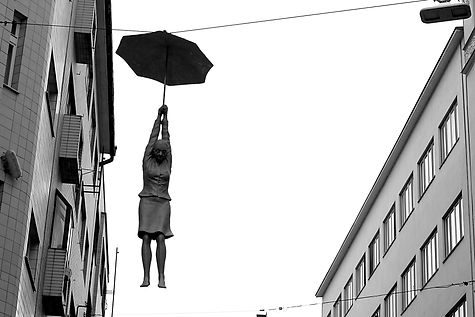
Disassociation from experiencing one’s distressing feelings is a common response to trauma. People will do anything to stop feeling the pain – self-medicate on drink and drugs, cut themselves, even change their sex. When disassociation by closing down emotions becomes a pattern, you can end up living your life at one remove, always feeling distanced from reality, as though there is a glass plate between you and feeling truly alive.
But there is a price to pay if you want to become reunited with your feelings because it means feeling the pain as it actually happens. It means becoming raw and sensitive and facing up to hurt. When I finally became reunited with my feelings later on, as a considered choice, I hadn’t realised just how much it was going to mess me up. I had to withdraw from professional life for quite some time because I suddenly couldn’t cope with the stress of it. But there comes a time when you can’t afford to feel only half alive any more. What’s the point of life if you can’t experience it as you live it?


Comments